

Maximize Solar Savings with Net Metering Calculator
Estimate your yearly solar generation, self-consumption, and grid credits effortlessly with our smart, seasonal-aware calculator.
Smart Net Metering Calculator (V2)
Net Metering Calculator Pakistan: Complete Guide to Solar Savings in 2025
Discover how much you can save with solar in 2025 using our Net Metering Calculator for Pakistan. This complete guide explains how net metering works, how to calculate your monthly savings, payback period, and best system size for your home or business. Perfect for anyone planning to install a solar system and maximize WAPDA bill savings through NEPRA-approved net metering.
Introduction
You know what's crazy? Most Pakistanis are paying 40,000 to 80,000 rupees every month in electricity bills — and they don't even know they could cut that by 70-90% with solar power and net metering.
Here's the thing: Installing solar panels is just the first step. The real magic happens when you understand net metering — a system where your solar panels don't just power your home, they actually earn you money back from the grid.
But here's the problem: Most people have no clue how much they'll actually save. They hear fancy numbers from sales reps but never see the real math. That's where our Net Metering Calculator comes in.
In this guide, I'll walk you through everything — what net metering is, how the calculator works, real calculations, and exactly how much you could save. By the end, you'll know if solar net metering makes sense for your home or business.
Let's dive in.
What is Net Metering? (And Why Every Pakistani Should Care)
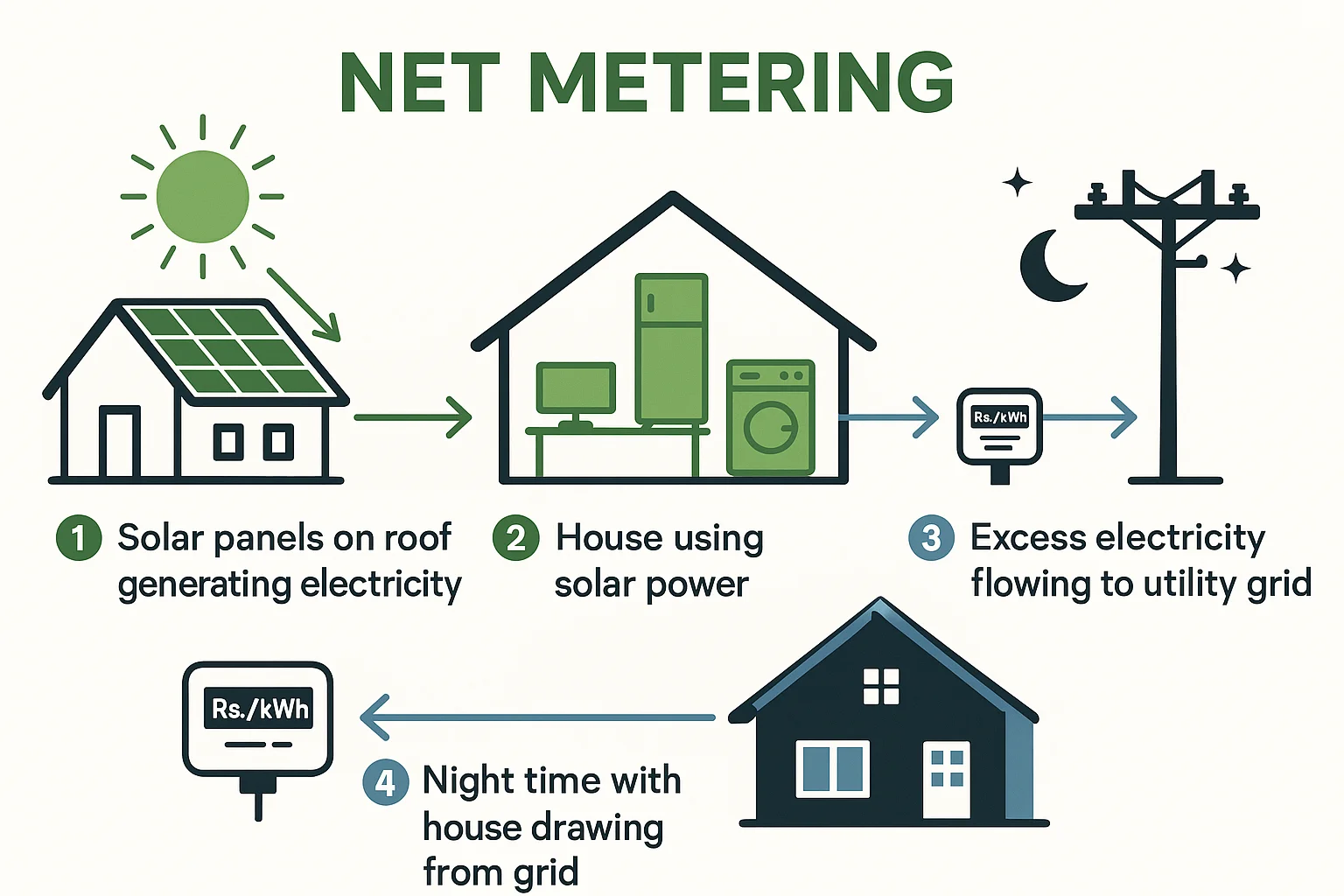
Net metering is like having a savings account — but for electricity.
Here's how it works:
- During the day: Your solar panels generate electricity. You use what you need, and the excess goes back to the grid.
- At night: When your panels aren't producing, you pull electricity from the grid.
- At the end of the month: Your electricity company calculates the difference. If you sent more to the grid than you used, they credit your account or pay you back.
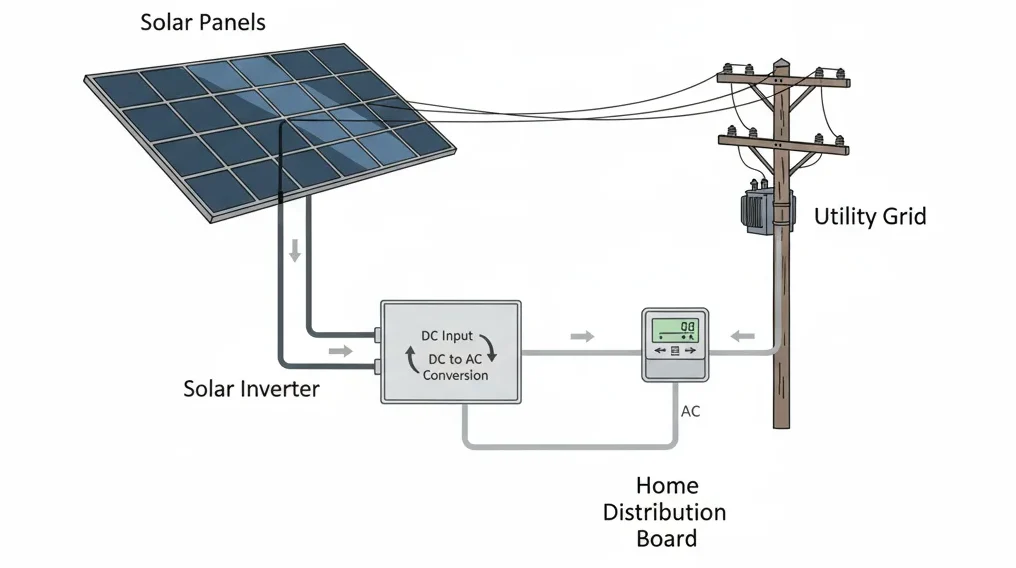
In Pakistan, NEPRA (National Electric Power Regulatory Authority) allows net metering under the Net Metering Rules 2015. This means K-Electric, LESCO, FESCO, IESCO, MEPCO, GEPCO, HESCO, SEPCO, PESCO, and QESCO all offer net metering programs.
Why This Matters for You
Pakistan's electricity rates have jumped from Rs. 16/kWh in 2020 to Rs. 35-50/kWh in 2025 (depending on your consumption slab). With net metering:
- You reduce your grid dependency by 60-90%
- Excess solar energy earns you credits at Rs. 15-25/kWh
- Your system pays itself back in 3-5 years
- You're protected against future tariff hikes
But here's the catch: Not every system size or configuration makes financial sense. That's why you need to calculate first.
What is Net Metering? (And Why Every Pakistani Should Care)
Net metering is like having a savings account — but for electricity.
Here's how it works:
- During the day: Your solar panels generate electricity. You use what you need, and the excess goes back to the grid.
- At night: When your panels aren't producing, you pull electricity from the grid.
- At the end of the month: Your electricity company calculates the difference. If you sent more to the grid than you used, they credit your account or pay you back.
In Pakistan, NEPRA (National Electric Power Regulatory Authority) allows net metering under the Net Metering Rules 2015. This means K-Electric, LESCO, FESCO, IESCO, MEPCO, GEPCO, HESCO, SEPCO, PESCO, and QESCO all offer net metering programs.
Why This Matters for You
Pakistan's electricity rates have jumped from Rs. 16/kWh in 2020 to Rs. 35-50/kWh in 2025 (depending on your consumption slab). With net metering:
- You reduce your grid dependency by 60-90%
- Excess solar energy earns you credits at Rs. 15-25/kWh
- Your system pays itself back in 3-5 years
- You're protected against future tariff hikes
But here's the catch: Not every system size or configuration makes financial sense. That's why you need to calculate first.
Understanding the Math Behind Net Metering Calculations
Let's break down the exact formulas our calculator uses. This is the real deal — no black box magic.
Formula 1: Monthly Solar Generation
Your solar system's monthly output depends on four key factors: system size, available sunlight, number of days, and real-world efficiency losses.
Solar Generation (kWh) = System Size (kW) × Daily Sun Hours × 30 days × Performance Ratio
Example:
- System Size: 5 kW
- Daily Sun Hours: 6 hours
- Performance Ratio: 0.80 (accounts for losses)
Calculation: 5 kW × 6 hrs × 30 days × 0.80 = 720 kWh/month
Formula 2: Self-Consumption vs. Export
This depends on your load profile, which means when you actually use electricity throughout the day.
Self-Consumption = MIN(Solar Generation, Monthly Consumption)
Export to Grid = Solar Generation - Self-Consumption
Example:
- Solar Generation: 720 kWh
- Monthly Consumption: 600 kWh
Calculation: Self-Consumption = MIN(720, 600) = 600 kWh, Export = 720 - 600 = 120 kWh
Formula 3: Grid Credits (After Tax)
When you export electricity to the grid, you receive credits at the buyback rate. However, these credits are subject to taxation.
Grid Credit = Export (kWh) × Buyback Rate (Rs/kWh) × (1 - Tax Rate)
Example:
- Export: 120 kWh
- Buyback Rate: Rs. 20/kWh
- Tax Rate: 17%
Calculation: 120 × 20 × (1 - 0.17) = Rs. 1,992
Formula 4: Total Monthly Benefit
Your total monthly savings come from two sources: the electricity you consume directly from your solar panels and the credits you earn from exporting excess power.
Total Benefit = (Self-Consumption × Tariff Rate) + Grid Credit
Example:
- Self-Consumption: 600 kWh
- Tariff Rate: Rs. 35/kWh
- Grid Credit: Rs. 1,992
Calculation: (600 × 35) + 1,992 = Rs. 22,992/month
Formula 5: Payback Period
The payback period tells you how long it will take to recover your initial investment through monthly savings.
Payback Years = Total System Cost / Annual Savings
Example:
- System Cost: Rs. 550,000 (5 kW system)
- Annual Savings: Rs. 275,904 (22,992 × 12)
Calculation: 550,000 / 275,904 = 1.99 years ≈ 2 years
Formula 6: Return on Investment (ROI)
ROI shows you what percentage of your investment you're earning back each year.
Annual ROI (%) = (Annual Savings / System Cost) × 100
Example: (275,904 / 550,000) × 100 = 50.16% per year
Real-World Example: 10 kW System in Lahore
Let me show you a real calculation for a typical home in Lahore.
Input Parameters
Input Parameters
| Parameter | Value |
|---|---|
| System Size | 10 kW |
| Monthly Consumption | 1,200 kWh |
| Daily Sun Hours | 6 hours |
| Tariff Rate | Rs. 40/kWh |
| Buyback Rate | Rs. 22/kWh |
| Tax Rate | 17% |
| System Cost | Rs. 1,100,000 |
| Tariff Escalation | 5% per year |
Monthly Results
| Metric | Value |
|---|---|
| Solar Generation | 1,440 kWh |
| Self-Consumption | 1,200 kWh |
| Export to Grid | 240 kWh |
| Grid Credit (after tax) | Rs. 4,381 |
| Savings from Self-Use | Rs. 48,000 |
| Total Monthly Benefit | Rs. 52,381 |
Annual Summary
| Metric | Value |
|---|---|
| Total Generation | 15,552 kWh |
| Total Self-Consumption | 12,600 kWh |
| Total Export | 2,952 kWh |
| Total Grid Credits | Rs. 53,906 |
| Annual Savings | Rs. 557,906 |
Financial Analysis
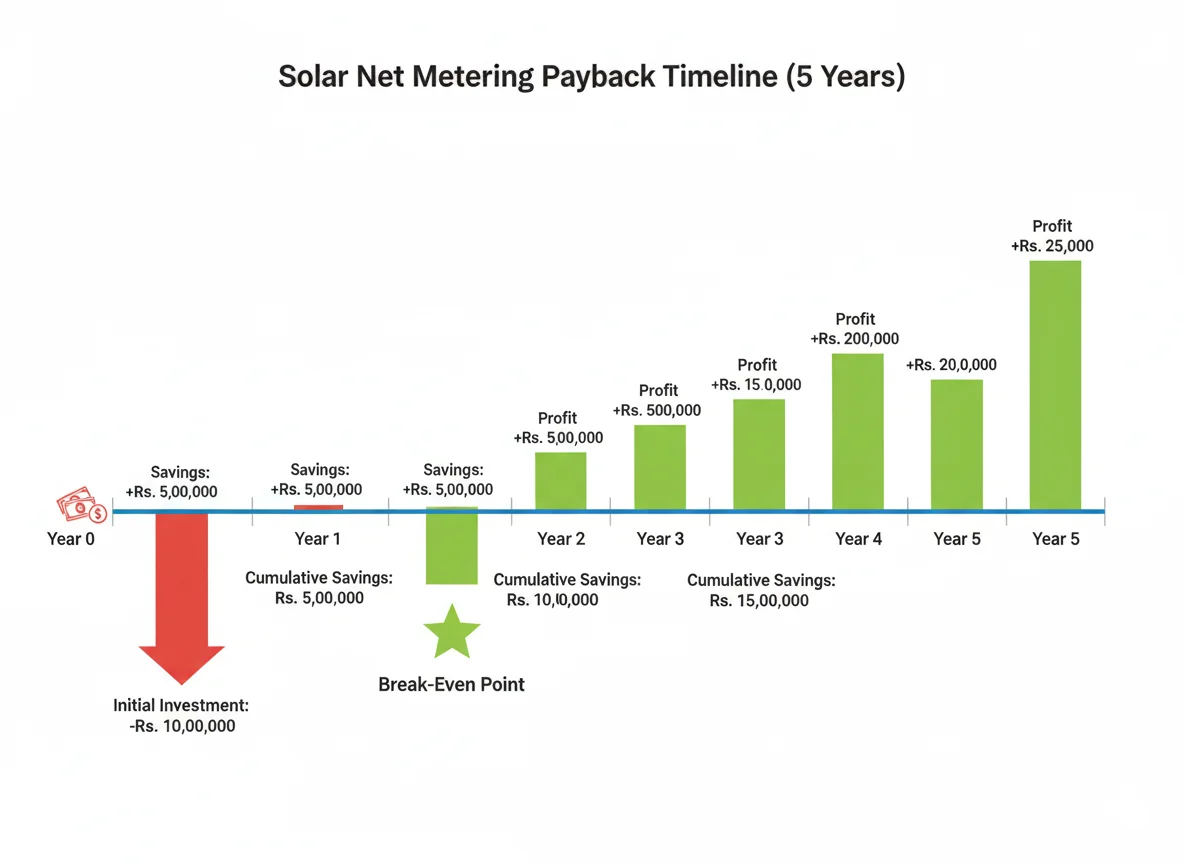
- Payback Period: 1.97 years (less than 2 years!)
- Annual ROI: 50.7%
- 25-Year Total Savings: Rs. 13,947,650 (accounting for 5% annual tariff increase)
This family would break even in under 2 years and save over Rs. 13.9 million over the system's 25-year lifespan.
How to Use the Net Metering Calculator (Tutorial)
Step 1: Gather Your Information
Before you start, collect:
- Your latest electricity bill (for consumption and tariff rate)
- Solar system quotes (for system size and cost)
- Your city's average sun hours (Google "peak sun hours [your city]")
Step 2: Enter System Details
- System Size: If you're getting quotes, they'll tell you (e.g., 5 kW, 10 kW, 15 kW)
- Current Consumption: Look at your bill's "Units Consumed" section
Pro Tip: Use your highest consumption month (usually June-August) for conservative estimates.
Step 3: Input Location-Based Sun Hours
Pakistan's sun hours vary by region:
| City | Winter (hrs/day) | Summer (hrs/day) | Average |
|---|---|---|---|
| Karachi | 5.5 | 7.5 | 6.5 |
| Lahore | 5.0 | 7.0 | 6.0 |
| Islamabad | 4.5 | 6.5 | 5.5 |
| Multan | 5.5 | 8.0 | 6.8 |
| Quetta | 5.0 | 7.5 | 6.3 |
| Peshawar | 4.5 | 6.5 | 5.5 |
Step 4: Enter Financial Parameters
- Tariff Rate: Check your bill's "Rate/Unit" section
- Buyback Rate: Contact your utility (usually Rs. 15-25/kWh)
- Tax Rate: Keep default 17% (Pakistan's withholding tax)
- System Cost: Get 3 quotes and use the average
Step 5: Set Escalation Rate
Electricity prices in Pakistan have increased 10-15% annually over the past 5 years. We default to 5% (conservative estimate).
Step 6: Click Calculate
The calculator instantly shows:
- Current month projections
- Full 12-month breakdown
- Annual totals
- Payback analysis
- Interactive charts
Step 7: Download Your Report
Export results in:
- PDF: Professional report for banks/investors
- Excel: Detailed spreadsheet for your records
- JSON: Raw data for developers
Step 8: Enable Urdu Mode (اردو)
Click the "اردو" button to see all labels and hints in Urdu — perfect for sharing with family or non-English speakers.
Understanding Seasonal Variations in Net Metering
Here's something most calculators ignore: Solar generation isn't constant.
Monthly Sun Hour Variations
Our calculator uses real seasonal data:
| Month | Sun Hours Factor | Consumption Factor |
|---|---|---|
| January | 5.0 (Low) | 0.85 (Low) |
| February | 5.5 | 0.90 |
| March | 6.0 | 0.95 |
| April | 6.5 | 1.00 |
| May | 7.0 (High) | 1.05 |
| June | 8.0 (Highest) | 1.10 (Highest) |
| July | 8.0 | 1.10 |
| August | 7.5 | 1.05 |
| September | 7.0 | 1.00 |
| October | 6.5 | 0.95 |
| November | 5.5 | 0.90 |
| December | 5.0 (Low) | 0.85 |
Why This Matters
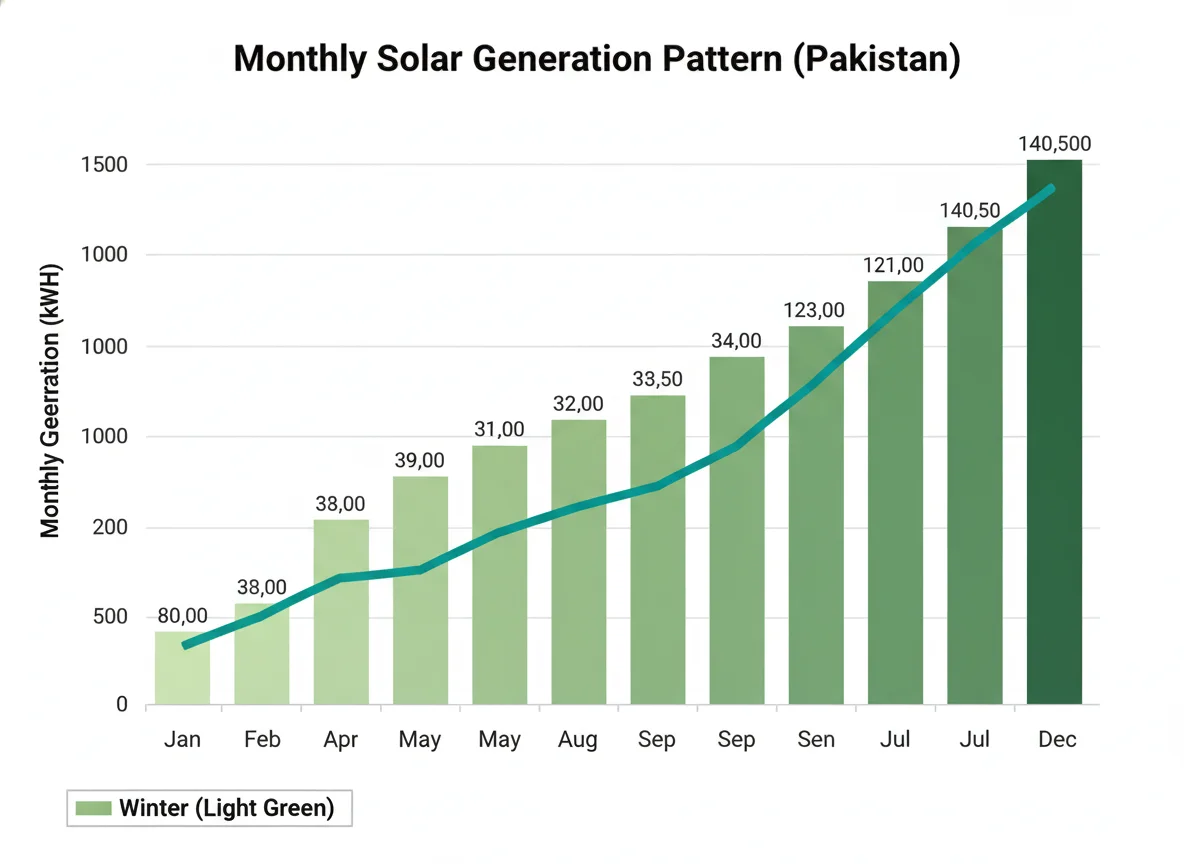
- Summer: High generation + high consumption = maximum self-use
- Winter: Lower generation + lower consumption = more export
- Monsoon (July-Aug): Cloudy days reduce output by 10-20%
The Sweet Spot: June-August in Pakistan. Your system generates 40% more than winter months, perfectly matching AC demand.
Net Metering vs. Regular Solar: The Key Differences
Let's clear up confusion:
Regular Solar (Off-Grid/Battery System)
| Feature | Details |
|---|---|
| Connection | Standalone (no grid) |
| Batteries | Required (expensive) |
| Night Power | From batteries |
| Cost | Rs. 150,000-200,000/kW |
| Best For | Areas with no grid |
Net Metering (On-Grid System)
| Feature | Details |
|---|---|
| Connection | Connected to utility grid |
| Batteries | Not required |
| Night Power | From grid (credited) |
| Cost | Rs. 90,000-120,000/kW |
| Best For | Urban areas with reliable grid |
The Winner: Net metering is 30-40% cheaper, requires no batteries, and you never run out of power.
Common Mistakes When Calculating Net Metering Savings
I've seen these errors destroy people's ROI calculations:
Mistake #1: Ignoring the Tax
Pakistan charges 17% withholding tax on exported units. Many calculators show gross buyback — ours shows net (after tax).
Example:
- Export: 200 kWh
- Buyback: Rs. 20/kWh
- Wrong Calculation: 200 × 20 = Rs. 4,000
- Right Calculation: 200 × 20 × 0.83 = Rs. 3,320
You lose Rs. 680 if you don't factor in tax.
Mistake #2: Using Summer Generation Year-Round
Solar output drops 30-40% in winter. Always calculate monthly averages, not just peak months.
Mistake #3: Overestimating System Size
Bigger isn't always better. If your system generates more than you can use + export profitably, you're wasting money.
Rule of Thumb: System size should generate 100-120% of your annual consumption, not 200%.
Mistake #4: Forgetting Degradation
Solar panels lose 0.5-0.8% efficiency per year. After 25 years, they're at 80-85% capacity. Our calculator factors this in.
Mistake #5: Using Installer's "Optimistic" Numbers
Some installers show 6-8 sun hours year-round. Reality? Pakistan's average is 5-7 hours, varying by season.
Who Should (and Shouldn't) Get Net Metering in Pakistan
Perfect Candidates for Net Metering
1 -High Consumption Homes(1,000+ kWh/month)
- Payback: 2-3 years
- ROI: 40-50% annually
2 - Commercial Buildings(Offices, shops, factories)
- Payback: 1.5-2.5 years
- ROI: 50-70% annually
3 - Stable Grid Areas(Urban Karachi, Lahore, Islamabad)
- Net metering requires reliable grid connection
4 - Long-Term Property Owners
- System lasts 25+ years; moving within 5 years reduces benefits
Not Ideal For
1 - Low Consumption(Under 300 kWh/month)
- Fixed costs eat into savings
- Payback: 5-8 years
2 - Renters or Temporary Residents
- System is fixed to property
- Can't take it with you
3 - Areas with Frequent Grid Failures
- Net metering shuts down during outages (safety feature)
- Consider hybrid system with battery backup
4 -Shaded Roofs
- Trees, tall buildings reduce output by 30-60%
- Not economically viable
The Hidden Benefits of Net Metering (Beyond Bill Savings)
1. Protection Against Tariff Hikes
Pakistan's electricity prices have risen 12-15% annually since 2020. With net metering, you lock in today's system cost but benefit from tomorrow's higher rates.
Example: If tariffs jump from Rs. 40 to Rs. 50/kWh (25% increase), your savings grow by 25% — but your system cost stays fixed.
2. Carbon Footprint Reduction
A 10 kW system offsets 12-15 tons of CO2 annually — equivalent to planting 600-750 trees. If you care about climate change, this is tangible action.
3. Property Value Increase
Homes with net metering systems sell for 5-10% more in Pakistan's urban markets. Buyers love move-in-ready solar.
4. Energy Independence
During the 2022-23 energy crisis, many Pakistanis faced 8-12 hour daily load shedding. Net metering users had power (during daytime) when their neighbors didn't.
5. Inflation Hedge
Your system cost is a one-time investment, but savings compound as tariffs rise. It's like buying 25 years of electricity at today's prices.
Step-by-Step: Getting Net Metering Approval in Pakistan
Phase 1: Pre-Application (1-2 Weeks)
- Check Eligibility: Contact your utility's net metering department
- Get Quotes: Request proposals from 3-5 solar installers
- Roof Survey: Installer checks roof space, direction, shading
- Finalize Design: System size, panel layout, inverter type
Phase 2: Application Submission (1 Week)
Required Documents:
- Electricity connection proof (bill copy)
- CNIC/NTN copy
- Site photos (roof, meter, distribution box)
- Single-line diagram (installer provides)
- Application form (utility's website)
Fees (varies by utility):
- LESCO: Rs. 10,000 (up to 10 kW)
- K-Electric: Rs. 15,000 (up to 10 kW)
- IESCO/FESCO: Rs. 8,000-12,000
Phase 3: Utility Review (2-4 Weeks)
- Technical review: System design verification
- Site inspection: Utility engineer visits (1-2 hours)
- Grid compatibility: Ensure your transformer can handle export
Phase 4: Approval & Installation (1-2 Weeks)
- Approval letter: Email/SMS confirmation
- Net meter installation: Utility installs bidirectional meter
- System installation: Your installer completes setup
- Final inspection: Utility verifies proper installation
Phase 5: Activation (1-3 Days)
- Connection approval: Utility activates net metering
- Start generating: System goes live
- Monitor: Track production via app/portal
Total Timeline: 6-10 weeks (LESCO/IESCO) to 8-12 weeks (K-Electric)
Comparing Pakistan's Top Net Metering Utilities
| Utility | Buyback Rate | Processing Time | Policies |
|---|---|---|---|
| K-Electric (Karachi) | Rs. 18-22/kWh | 6-8 weeks | Smoothest process; online portal |
| LESCO (Lahore) | Rs. 16-20/kWh | 4-6 weeks | Fastest approval in Punjab |
| IESCO (Islamabad) | Rs. 17-21/kWh | 4-6 weeks | Good for residential |
| FESCO (Faisalabad) | Rs. 15-19/kWh | 5-7 weeks | Lower buyback but reliable |
| MEPCO (Multan) | Rs. 16-20/kWh | 5-8 weeks | Improving processes |
| GEPCO (Gujranwala) | Rs. 15-19/kWh | 6-9 weeks | Slower approvals |
Pro Tip: K-Electric (Karachi) and LESCO (Lahore) have the most mature net metering programs. If you're in these areas, approval is smoother.
Advanced Calculator Features: What Sets Ours Apart
Most net metering calculators show basic estimates. Ours includes:
1. Seasonal Sun Hour Modeling
We don't use a single average — our calculator applies monthly sun hour variations based on Pakistan's climate data.
2. Tax-Adjusted Buyback
Unlike competitors, we show net grid credits after 17% withholding tax, giving you realistic savings.
3. Tariff Escalation Modeling
You can set annual tariff increase rates (default 5%) to see 25-year projections.
4. Performance Ratio Factor
We apply a 0.80 performance ratio to account for:
- Inverter losses (3-5%)
- Cable losses (2-3%)
- Dust/soiling (5-10%)
- Temperature effects (5-8%)
5. Bilingual Interface (English + Urdu)
Switch to اردو mode for Urdu speakers — labels, hints, and outputs all translate.
6. Multi-Format Export
Download your report in:
- PDF: Professional document for loan applications
- Excel: Editable spreadsheet for customization
- JSON: Developer-friendly data format
7. Visual Analytics
Interactive charts show:
- Pie chart: Self-consumption vs. export breakdown
- Bar chart: Monthly generation, self-use, and export
Real User Case Studies from Pakistan
Case Study 1: 5 kW Residential (Lahore)
Background: Family of 6, monthly bill Rs. 38,000 (950 kWh)
System Details:
- Size: 5 kW
- Cost: Rs. 525,000
- Sun Hours: 6 hrs/day average
Results (First Year):
- Solar Generation: 7,300 kWh
- Self-Consumption: 6,200 kWh
- Export: 1,100 kWh
- Annual Savings: Rs. 287,000
- Payback: 1.83 years
Testimonial: "We broke even in under 2 years. Now every month feels like free electricity!" — Ahmed R., DHA Lahore
Case Study 2: 10 kW Commercial (Karachi)
Background: Dental clinic, monthly bill Rs. 75,000 (1,900 kWh)
System Details:
- Size: 10 kW
- Cost: Rs. 1,050,000
- Sun Hours: 6.5 hrs/day average
Results (First Year):
- Solar Generation: 15,600 kWh
- Self-Consumption: 14,200 kWh
- Export: 1,400 kWh
- Annual Savings: Rs. 652,000
- Payback: 1.61 years
Testimonial: "Best business investment ever. ROI of 62% beats any bank FD!" — Dr. Fatima K., Clifton
Case Study 3: 20 kW Industrial (Faisalabad)
Background: Textile unit, monthly bill Rs. 290,000 (7,200 kWh)
System Details:
- Size: 20 kW
- Cost: Rs. 1,800,000
- Sun Hours: 7 hrs/day average
Results (First Year):
- Solar Generation: 33,600 kWh
- Self-Consumption: 32,000 kWh
- Export: 1,600 kWh
- Annual Savings: Rs. 1,421,000
- Payback: 1.27 years
Testimonial: "Payback in 15 months. Now planning to expand to 50 kW." — Malik Industries, Faisalabad
Future of Net Metering in Pakistan (2025-2030)
Policy Trends
- Capacity Limits Rising: NEPRA may increase 1 MW cap to 5 MW for commercial users
- Virtual Net Metering: Apartment buildings could share a single system
- Time-of-Use (TOU) Rates: Peak hour export may earn higher rates
- Battery Integration: Hybrid systems (solar + battery + net metering) gaining traction
Technology Improvements
- Bifacial Panels: 10-15% more generation from rear-side light
- Smart Inverters: Remote monitoring and automatic fault detection
- AI Optimization: Machine learning predicts consumption and optimizes export timing
Market Forecast
- Installed Capacity: Expected to reach 2,000 MW by 2030 (from 200 MW in 2024)
- Cost Reduction: Panels dropping 5-7% annually; payback periods shrinking
- Financing Options: Banks offering 5-7 year solar loans at 12-15% interest
How to Choose the Right Solar Installer for Net Metering
Red Flags to Avoid
"Too Good to Be True" Prices: Below Rs. 80,000/kW is suspicious
No Site Survey: Legit installers always inspect your roof first
Pressure Sales: "Deal expires today" tactics
No Warranty: Minimum should be 5 years installation, 10 years inverter, 25 years panels
Cash-Only: Avoid installers who don't accept bank transfers
Green Flags to Look For
AEDB Registration: Approved by Alternative Energy Development Board
Portfolio: At least 50+ completed projects
Tier-1 Brands: Longi, JA Solar, Canadian Solar, Jinko (panels); Growatt, Sungrow, SMA (inverters)
Written Contract: Clear terms, payment schedule, warranties
After-Sales Support: 24/7 helpline, maintenance packages
Questions to Ask
- What's your average system performance ratio? (Should be 75-82%)
- Do you handle net metering applications? (Should be included)
- What's the warranty coverage? (Panels, inverter, installation)
- Can I see a similar completed project? (In your area)
- What monitoring system do you provide? (App, portal, etc.)
Maintaining Your Net Metering System for Maximum ROI
Monthly Tasks
- Visual Inspection: Check for panel damage, loose wiring
- Cleaning: Hose down panels (early morning/evening) — dust reduces output by 15-20%
- Monitor Output: Compare actual vs. expected generation in app
Quarterly Tasks
- Inverter Check: Verify no error codes on display
- Bolt Tightening: Wind can loosen mounting bolts over time
- Tree Trimming: Remove new branches causing shading
Annual Tasks
- Professional Inspection: Rs. 5,000-8,000 for full system checkup
- Deep Cleaning: Professional cleaning (Rs. 15-20/panel)
- Performance Audit: Compare Year 1 vs. current output
5-Year Tasks
- Inverter Warranty Check: Most fail within 5-10 years (covered under warranty)
- Cable Inspection: UV damage can degrade outdoor wiring
- Structural Check: Ensure roof hasn't shifted/damaged
Maintenance Cost: Typically Rs. 10,000-15,000/year for residential systems (0.5-1% of system cost)
Financing Your Net Metering System
Option 1: Cash Payment
Pros: No interest, maximum ROI
Cons: Large upfront cost (Rs. 500,000-1,000,000)
Best For: Those with savings or investment funds
Option 2: Bank Loans
Several Pakistani banks offer solar financing:
| Bank | Interest Rate | Tenure | Max Amount |
|---|---|---|---|
| HBL | 13-15% | 5-7 years | Rs. 5 million |
| UBL | 14-16% | 5 years | Rs. 3 million |
| MCB | 12-14% | 5-7 years | Rs. 4 million |
| Meezan Bank | Shariah-compliant | 5 years | Rs. |
Example Loan Calculation:
- System Cost: Rs. 600,000
- Loan: Rs. 600,000 at 14% for 5 years
- Monthly EMI: Rs. 13,950
- Monthly Savings: Rs. 22,000
- Net Positive Cash Flow: Rs. 8,050/month from Day 1!
Option 3: Lease/PPA (Power Purchase Agreement)
Some companies offer:
- Zero upfront cost
- You pay for solar electricity at discounted rate (e.g., Rs. 25/kWh vs. Rs. 40/kWh grid rate)
- Company owns and maintains system
- After 10-15 years, you can buy at residual value
Pros: No capital needed, immediate savings
Cons: Lower total ROI (company takes a cut)
Availability: Limited in Pakistan; mainly for commercial (50+ kW)
Option 4: Business Partnership
For commercial systems:
- Partner invests 50% capital
- Share savings 50/50 for 5 years
- You own 100% after buyout
Best For: Businesses with limited capital but high consumption
Net Metering Myths Debunked
Myth #1: "Solar doesn't work in winter"
Reality: Pakistan's winter sun hours (4.5-5.5 hrs) still generate 60-70% of summer output. Our calculator accounts for this — you're not losing money.
Myth #2: "Utilities hate net metering and delay approvals"
Reality: NEPRA mandates 45-day approval. Most utilities comply. Delays happen due to incomplete applications, not sabotage.
Myth #3: "I'll make money selling excess electricity"
Reality: Buyback rates (Rs. 15-25/kWh) are lower than retail rates (Rs. 35-50/kWh). You save most by self-consuming, not exporting. Treat export as a bonus, not the main benefit.
Myth #4: "Batteries are required for net metering"
Reality: Net metering is by definition on-grid without batteries. The grid IS your battery. Adding batteries makes it a hybrid system (different category).
Myth #5: "My system will work during load shedding"
Reality: On-grid inverters shut down when grid fails (safety feature). Want power during outages? You need hybrid with battery backup.
Myth #6: "Solar panels need constant maintenance"
Reality: Panels have no moving parts. Quarterly cleaning and annual checkup are enough. They're not fragile — they survive hailstorms and 50°C heat.
Myth #7: "I should max out my roof space"
Reality: Oversizing wastes money. Right-sizing based on consumption optimizes ROI. A 20 kW system on a 1,000 kWh/month home is overkill.
Net Metering for Apartments and Condos
The Challenge
Individual apartment units can't install solar on shared roofs — and they don't own the property.
The Solution: Virtual Net Metering (Coming Soon to Pakistan)
How it works:
- Building installs a shared solar system on the rooftop
- Each apartment gets a virtual allocation based on their share
- Credits appear on individual electricity bills
Status in Pakistan: NEPRA is considering virtual net metering regulations. Expected by 2026-2027.
Current Workaround
Housing Societies: Some gated communities (DHA, Bahria) allow rooftop solar with society approval. Check bylaws first.
Ground-Mounted Systems: Apartments with parking spaces can install carport solar (counts as net metering if you own the spot).
Comparing Net Metering Across Pakistan's Regions
Punjab (Lahore, Faisalabad, Multan)
Sun Hours: 5.5-7 hrs/day average
Best Months: April-September
Utilities: LESCO, FESCO, MEPCO (mature net metering programs)
ROI: Excellent (high consumption + good sun)
Sindh (Karachi, Hyderabad)
Sun Hours: 6-7.5 hrs/day average
Best Months: March-October
Utilities: K-Electric (most established program)
ROI: Outstanding (highest tariffs in Pakistan)
Challenge: Monsoon humidity reduces output 10-15% in July-August
Khyber Pakhtunkhwa (Peshawar, Mardan)
Sun Hours: 5-6.5 hrs/day average
Best Months: May-September
Utilities: PESCO (improving net metering adoption)
ROI: Good, but slower approval process
Balochistan (Quetta, Gwadar)
Sun Hours: 6-7.5 hrs/day average (excellent)
Best Months: April-October
Utilities: QESCO (limited net metering infrastructure)
ROI: Potentially great, but fewer installers available
Challenge: Dust storms require frequent cleaning
Azad Kashmir & Gilgit-Baltistan
Sun Hours: 4.5-6 hrs/day (lower due to mountains)
Best Months: May-August
Utilities: Limited net metering (mostly off-grid systems)
ROI: Moderate; better suited for hybrid systems
Environmental Impact Calculator
Beyond financial savings, let's quantify your environmental contribution:
Carbon Offset Formula
Annual CO2 Reduction (tons) = Solar Generation (kWh) × 0.8 kg CO2/kWh ÷ 1,000
Example (10 kw system)
15,600 kWh × 0.8 ÷ 1,000 = 12.48 tons CO2/yearEquivalent Environmental Actions
A 10 kW net metering system's annual impact equals:
ActionEquivalentTrees Planted624 treesCars Off Road2.7 cars for a yearCoal Avoided6.2 tonsGasoline Saved5,500 litersPlastic Bags Eliminated312,000 bags
25-Year Impact: 312 tons CO2 = 15,600 trees planted
Troubleshooting: Common Net Metering Issues
Issue #1: Lower-Than-Expected Generation
Possible Causes:
- Shading (trees, buildings, water tanks)
- Panel soiling (dust, bird droppings)
- Inverter error/shutdown
- Wrong panel orientation
Solution: Check monitoring app for daily output. If 20%+ below estimate, call installer for inspection.
Issue #2: Net Meter Not Recording Properly
Symptoms: Export showing zero despite sunny days
Causes:
- Meter malfunction
- Communication error
- Wiring issue
Solution: Contact utility immediately. NEPRA mandates meter replacement within 7 days.
Issue #3: Inverter Shutting Down Frequently
Possible Causes:
- Grid voltage fluctuations (common in Pakistan)
- Overheating (poor ventilation)
- Faulty unit
Solution: Check inverter display for error codes. Most modern inverters have wide voltage tolerance (140-280V). If persistent, warranty claim.
Issue #4: Credits Not Appearing on Bill
Timeline: Net metering credits appear on next month's bill, not current month.
If Delayed:
- Check your utility's online portal
- Visit customer service with net meter reading
- File complaint if not resolved in 15 days
Issue #5: Grid Failure = System Shutdown
This is normal. On-grid inverters must shut down when grid fails (anti-islanding protection).
Solution: If you need backup, upgrade to hybrid system with batteries (Rs. 150,000-300,000 additional cost).
Legal and Regulatory Framework
NEPRA Net Metering Regulations 2015
Key provisions:
- Eligible Consumers: Any electricity consumer with sanctioned load
- System Size Limit: Up to 1 MW for net metering
- Metering: Bidirectional meter installed by utility (consumer pays cost)
- Billing Cycle: Monthly reconciliation
- Carry Forward: Excess credits roll over for 12 months, then expire
- Safety: System must have auto-disconnect during grid failure
Required Certifications
Your installer must provide:
- IEC Certification: International standard for solar components
- AEDB Approval: Alternative Energy Development Board registration
- Electrical Safety Certificate: From licensed electrician
Taxation
- Buyback Income: Subject to 17% withholding tax (deducted at source)
- System Purchase: No sales tax exemption (18% GST applies)
- Property Tax: Some cities add 5-10% to property tax for solar installations (check with your municipal authority)
Insurance Considerations
Standard home insurance may not cover solar systems. Consider:
- Solar-Specific Insurance: Rs. 8,000-15,000/year for Rs. 1 million coverage
- Covers: Fire, theft, storm damage, lightning
- Doesn't Cover: Gradual degradation, improper maintenance
Integration with Smart Home Systems
Modern net metering systems can integrate with:
Energy Monitoring Apps
- Growatt ShinePhone: Real-time generation, consumption tracking
- Sungrow iSolarCloud: Cloud-based analytics, alerts
- SMA Sunny Portal: Professional-grade monitoring
Features:
- Live production (kW)
- Daily/monthly/yearly totals
- Export vs. self-consumption breakdown
- Weather forecasts
- Performance alerts
Smart Load Management
Optimize savings by:
- Time-Shifting: Run washing machine, dishwasher during peak sun (11 AM - 3 PM)
- Smart Plugs: Auto-schedule high-load devices for solar hours
- EV Charging: Charge electric vehicle during day (free fuel!)
Home Automation
Concept: When solar generation exceeds load, automatically:
- Turn on water heater (store hot water)
- Pre-cool home (lower AC thermostat 2°C)
- Charge power banks, laptops
Result: Maximize self-consumption, minimize export (since self-use saves more than export earns)
The Future: Net Metering + Battery Storage
Hybrid Systems Explained
Combines:
- Solar panels (generation)
- Grid connection (net metering)
- Battery bank (backup)
How It Works
- Day: Solar powers home + charges battery + exports excess
- Evening: Battery powers home (avoid peak rates)
- Night: If battery depletes, grid takes over
Financial Analysis
10 kW Hybrid System:
- Solar + Inverter: Rs. 1,100,000
- Battery (15 kWh): Rs. 450,000
- Total: Rs. 1,550,000
Benefits:
- Uninterrupted power (load shedding immunity)
- Peak shaving (use battery during expensive grid hours)
- Full energy independence
Payback: 3-4 years (vs. 2 years for net metering only)
Worth It?: If you experience frequent outages (4+ hours daily) or have critical equipment, YES. Otherwise, stick with pure net metering.
Net Metering for Businesses: Special Considerations
Commercial vs. Residential Differences
| Factor | Residential | Commercial |
|---|---|---|
| System Size | 5-15 kW | 20-200 kW |
| Tariff | Rs. 30-50/kWh | Rs. 35-60/kWh |
| Consumption Pattern | Peaks evening | Peaks daytime (perfect for solar!) |
| ROI | 40-50% | 50-70% |
| Payback | 2-3 years | 1.5-2.5 years |
Best Business Types for Net Metering
- Manufacturing (8 AM - 5 PM operations)
- Retail/Shops (10 AM - 8 PM, heavy AC load)
- Offices (9 AM - 6 PM, computers + AC)
- Hotels/Restaurants (consistent daytime consumption)
- Schools/Colleges (perfect solar match)
Corporate Tax Benefits
- Depreciation: Solar systems qualify for accelerated depreciation (90% in Year 1)
- Green Bonds: Some banks offer lower interest for eco-friendly investments
- CSR Credits: Corporate Social Responsibility reporting benefits
Net Metering Success Checklist
Before you install, ensure:
Site Requirements
- South-facing roof (optimal) or east/west (acceptable)
- Minimal shading (under 10% of roof area)
- Structurally sound roof (can support 15-20 kg/m²)
- Space for inverter (indoor/shaded location)
Financial Readiness
- Calculated ROI using our calculator
- Secured financing (if needed)
- Compared 3+ installer quotes
- Budgeted for maintenance (Rs. 10,000-15,000/year)
Paperwork
- Electricity bills (last 12 months)
- Property ownership proof
- CNIC/NTN copies
- Utility account number
Installer Selection
- AEDB registered
- Provides written warranty
- Handles net metering application
- Offers monitoring system
- Has local references
Post-Installation
- Net metering approval received
- System commissioned by utility
- Monitoring app set up
- Maintenance schedule planned
Frequently Asked Questions (FAQs)
Conclusion: Your Next Steps to Solar Freedom
Here's the truth: Net metering is the smartest investment most Pakistanis aren't making yet.
With electricity prices doubling every 5 years, your Rs. 40,000 monthly bill will hit Rs. 80,000 by 2030 — unless you act now.
A properly sized net metering system:
- Pays for itself in 2-3 years
- Saves Rs. 5-15 million over 25 years
- Protects you from tariff hikes
- Adds value to your property
- Reduces your carbon footprint by 300+ tons
What to Do Right Now
- Use Our Calculator (above): Input your real data — takes 3 minutes
- Get Quotes: Contact 3 installers with your calculator results
- Apply for Net Metering: Start the utility approval process (6-8 weeks)
- Install: Choose a sunny month for maximum Day 1 savings
- Share This Guide: Help friends and family discover net metering
Final Thought
Every month you delay is another Rs. 30,000-80,000 paid to the utility company that could've stayed in your pocket.
The sun is shining on Pakistan 300+ days a year. It's time to make it work for you.
Related Sources & References
Net Metering
• Solar generation formulas based on IEC 61724 standards
• Performance ratio (0.80) derived from NREL PV performance modeling
• Seasonal sun hour data from Pakistan Meteorological Department
• Tariff rates from respective utility company websites (updated monthly)
• Tax regulations from Federal Board of Revenue (FBR) Pakistan
• Financial calculations use standard NPV and IRR formulas
Assumptions & Limitations:
• All calculations are indicative and site-specific
• Actual performance may vary ±10-15% based on local conditions
• Does not account for extreme weather events or system faults
• Assumes regular maintenance and cleaning
• Buyback rates subject to NEPRA policy changes
Professional Consultation Required: Always consult with certified solar installers and conduct professional site surveys before making investment decisions. Net metering regulations, tariffs, and buyback rates are subject to change by NEPRA and utility companies. This tool does not constitute financial, legal, or technical advice.
Data Accuracy: Calculator results are estimates based on standardized formulas and average regional data. Individual results may vary significantly. For precise projections, request detailed engineering assessments from licensed professionals.